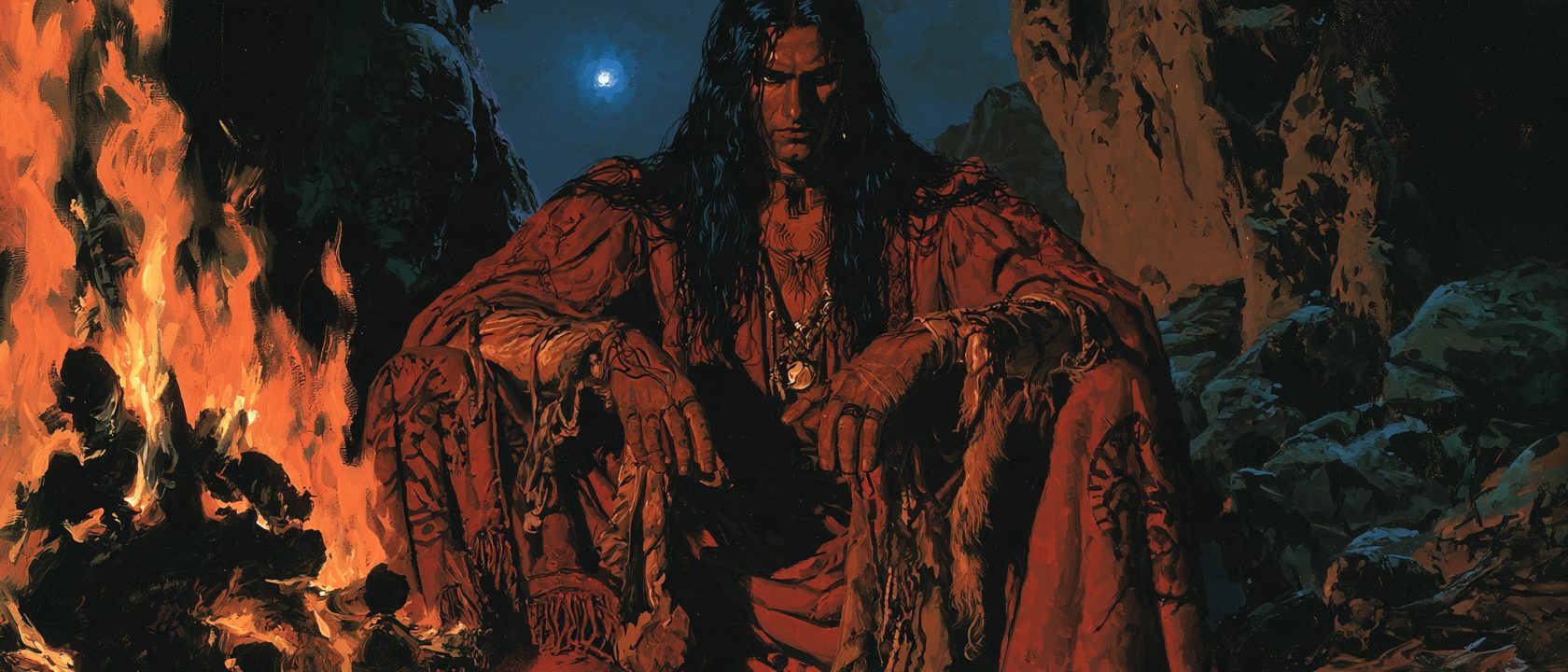
Act III, Chapter XLII
They set off out of Kuroishi toward an old outpost of Kaiden, spending the translation scrolls an hour at a time so that Hanto spoke and Saoirse carried his words. From the heights, the country lay open, fair, and visibly battered. Aoife flew high. The land fell sheer to the south and more gently to the north, where the rivers ran down, and Saoirse judged that a basin would lie that way. The birds had sung of a great pink tree through such a country. She believed she knew the likely direction of this land's Godtree.
Hanto knew it. It stood in the Emperor’s Wood, in Shune’s Basin, where the Lord of Kaiden had gone once a year. Only noble blood was meant to look upon the leaves. Saoirse explained that In other lands, trees of this kind had been threatened, and the Dragonlords had tried to defend them. Shune, as he told it, was a lady who had united her people against an old oppression. What Kaiden remembered was the endurance. Hanto would die with a sword in his hand.
The Remnants had been made the same way. After the fall of the empire, Hanto met Yuo, who nearly shot him, because other Kaiden soldiers had already gone mad. They found Silar, whose company had died, and in a village of survivors found Kojin, a farmer gifted with a blade, and his wife Baiji. Thalancord took them in, sent them south to gather forces, and vanished. That was eight or nine months past. His gold had been restorative: courage washing a field as light, and the madness seeming to quiet under it.
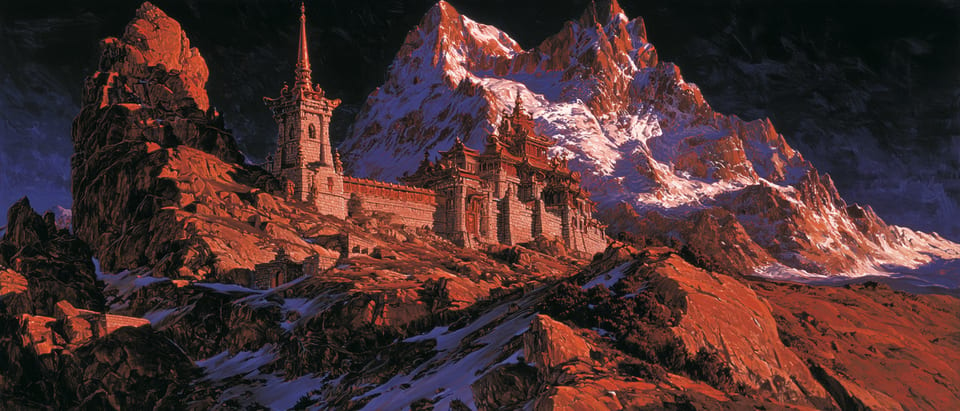
Fort Red Eve, high in the mountains of Kaiden.
That night Vaerek told Silar the rest. He explained again to the scholar that he was Heldranc’s vessel, given eyes and baptized in flame. Silar, worn thin by the work of putting innocents to the sword, asked to join the Kindred when this was done, and brightened further at the thought Pethengorom, a Dragon willing to share the deep knowledge he pursued.
The fort stood in the wind, covered in a dusting of snow. They knocked. Aoife saw no movement for a time. Soon, the great portcullis opened upon one old man with a cane. He was called Master Yudai - alone for two months, hoping stone and height would let him finish his days in quiet. A nearby village had gone to the madness, laughing, eyes orange and bleeding. His sons were long dead. He hoped to be met by Vana, goddess of death. He had not seen Thalancord, and he spoke as if that plight had already ended in disaster. He invited them in.
As they talked around a pit of flame and ash, the fire climbed. Vaerek lifted his blindfold. His soul was tattered. Tendrils of the soul extended from the core of the elder's body and yearned toward the others. Saoirse set a hand upon his head. The magic was beyond their rank, akin to what had possessed Nyralshirad, yet unalike its composition. While the Dark was cold, this was hot as a hand over a campfire. Her cleansing rebounded. She fell back into Vaerek, swearing she had been burned, and found no mark.
The pull left the man and took the room. Saoirse gazed upon the pit. Vaerek was held by the soul. Galand felt the same enamoration in the flame. Thunder cracked outside. The old man said they would be safe here, and that he joined them.
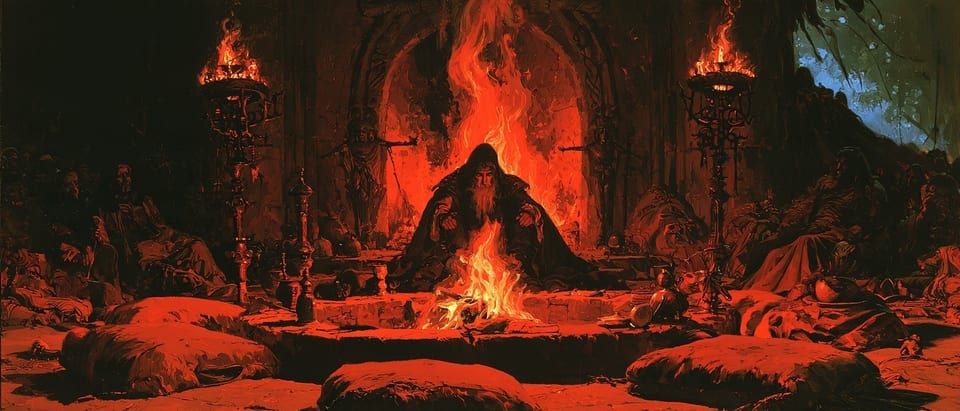
Master Yudai sits, enthralled by the flame of Izil.
Saoirse knew the flame. She had met it at the start of the journey, beside that candlemaker who walked into the desert and died. She put a gust through the pit and brought down a flash of rain indoors. The firepit died. The hearth behind them, rose higher, and Aoife shrieked at the coming storm. Vaerek drew Valeburn and set the edge at the elders throat. The old man muttered words and beckoned them to continue - the flame would devour his bones.
Vaerek's eyes changed, and the voice, and Heldranc looked at a wet room and a hearth still raging. Saoirse named the presence, this was Izil. Heldranc lowered the sword, turned to the flame, and gazed deeply upon the flame.
Act III, Chapter XLI
Five remained of Thalane’s order, and that truth sat with them at the fire while the others watched from the rocks, unable to understand a word.
Silar, who had followed rumor of dragons across the sea, asked how long they had sought Thalancord. Only the hours Kojin had already seen, Vaerek told him, though the search for the Drake’s brothers and sister had gone on far longer. He named himself Rathkin, a son of a Shasirian mother. Silar took his hand. He was of Shasir as well. Neither had met another Sethian in a long time. He spoke aside to Kojin, who laughed, and called it fate: they had not meant to be at Redroot at all. The Interval had begun, and Thalancord was missing.
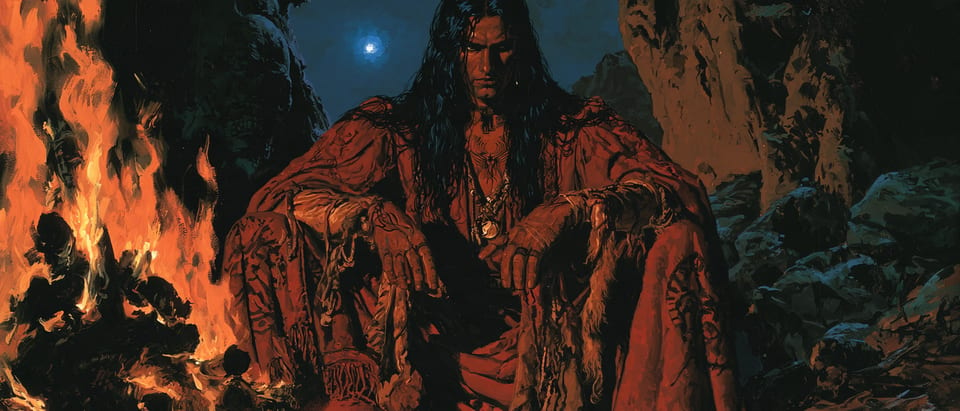
The five around the fire were all that was left. Their mentor and most of their companions had been taken by the curse. Vaerek named his companions. Silar noted the blindfold and was told there were other senses than sight.
Silar had come here when he learned that a power was fighting Olesh’s venom and that the power might be draconic. He had met Thalancord, as the order all had. The charge given down from Thalane was to find a cure if one existed, and if not to cut the afflicted down and give the bodies to flame. They had come to Redroot on a thin hope, found the village already fallen, and done what the duty required.
An interval, Silar said, was the turning of the cycle. Olesh had been slain three times and had risen three times. The old way was to gather militias without letting the curse pool, find where the madness gathered, and threaten it until Olesh came to restore it, and then to kill him. After great storms the land itself announced his return — thunders, rains, winds. Animals went frantic and rabid, forest creatures and household pets turned. Telorin said each country seemed to wear a different face of the same threat, and that something godlike sat behind it. He named Mintas Fae of Hesk, Vehem Adahr of the Samafi, and Vorn of the lands below. Silar poured wine called Tears of the Rains and said that here, at least, the enemy had a name and a season. After the last battles Thalancord had simply vanished. No body. The sky darkened for weeks; when the rains broke and the woods went loud, Olesh was returned.
In the morning they would walk a country they had not seen in two years, asking for Thalancord at every door: Kuroishi and its smith at its Ash-Forge, Fort Red Eve, a mountain shrine, Minashi, a Tea Village, and last Kireji in the valley.
They would travel together. Telorin and Perstrin set to work on scrolls, for translation. Vaerek asked what Silar knew of the Vigors. Silar called fire into his palm and said he served the first wardens of the world. Vaerek said he used them too, though not as a sorcerer, and walked him from the fire to tell him how that had come to be.
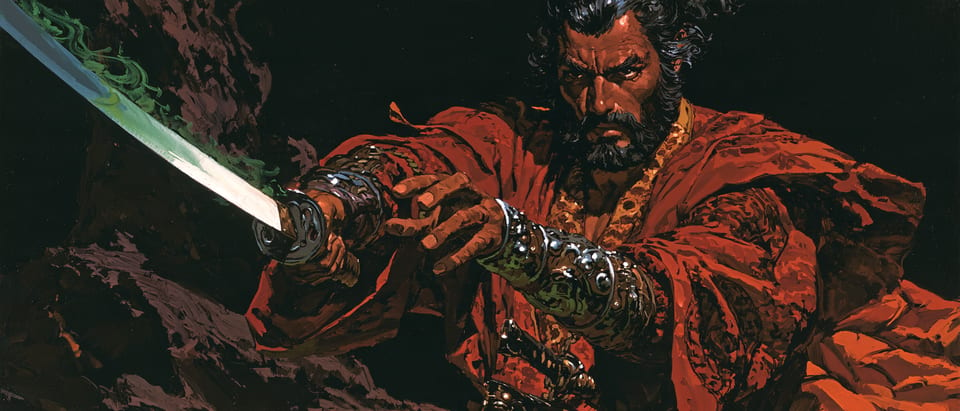
Morning came clear. Hanto fetched an odachi and met Galand in the clearing. The blade took on a green light. Galand’s eyes went gold, and they struck, steel against steel. Until Galand pulled back, and he knew what occurred — his soul pulled thin, just as Eig’s glaive had pulled. Hanto called his victory chance. The blade was Kuranata, Blade of the Damura, bound to cut spirit as well as flesh, for blood alone did not always finish Olesh’s work. Silar did not think the enchantment came from Raim. Thalane himself had come from the west, and that was all he knew.
Vaerek and Saoirse closed the wounds. Then they spoke the news they had spared the night before. A slayer of Raim walked. His name was Eig. He had killed a brother of Thalancord and maimed another, and two more lords had been lost to cataclysm besides. The remnant heard it as a cold thing. Silar had already heard of disaster in his homeland, and of a dragonlord taken there. Whether that force served Olesh, no one could say.
The scrolls opened speech between the companies. Galand embraced Hanto, named himself a vestige of the Light Soul, and unfurled wings. Kojin asked how the slayer fought. If Eig was already in this country, Thalancord would not survive.
They took the high road of Kaiden, where the land was still fair and the trees showed the last storm. Saoirse left the column with Aoifa, called birds down, and asked about the weather. The storm was worse than others, they told her, longer and louder. Kojin said the same: two weeks, sometimes three, then a silence like an ending.
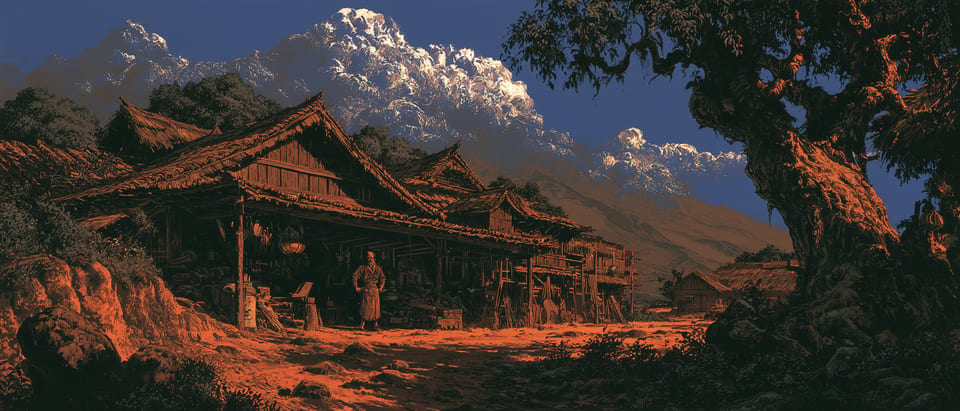
Kuroishi sat on a high river. Folk bowed to Hanto and stared at the rest. Children asked Galand whether a dragon was like the Nomura-beasts from the ridges, seven-legged and three-headed. Telorin found the Ash-Forge, a heart of flame that could take metal ordinary fire could not, and watched a smith fold mundane metal.
Perstrin looked at the dust in the street and longed for his past life. They spread through the village to ask again. Saoirse kept one question for the birds: whether their migrations still sang of a great pink tree.
Act III, Chapter XL
The common chamber was quiet when Galand and Vaerek entered, exhausted. Filibeth was there, awaiting Galand’s return. Pethengorom recovered in his chamber. Saoirse was asleep and awoke to their entering the central pool. Cadarinost’s death sat foremost in Vaerek’s mind; Heldranc’s anguish and Montmorian’s grief still moved in him.
The next day, Vaerek went to Montmorian in his sanctum, who was in silent grief. He spoke his condolence for the twin. They had hatched together and never been far apart, and Montmorian had watched him die with nothing in his power to stop it. Wars between kingdoms at least declared themselves. This one did not. They named Eig and named the dark and still did not know what either wanted. This ignorance had already taken Rallice in the Winterlands and now nearly two more in the sands. They could not carry that same blindness into the Farland.
Vaerek asked that the dragonlords remain behind. If a slayer hunted their kind, the last of them should not walk the road. Montmorian accepted the warning, agreed that they could not delay, and asked to be left.
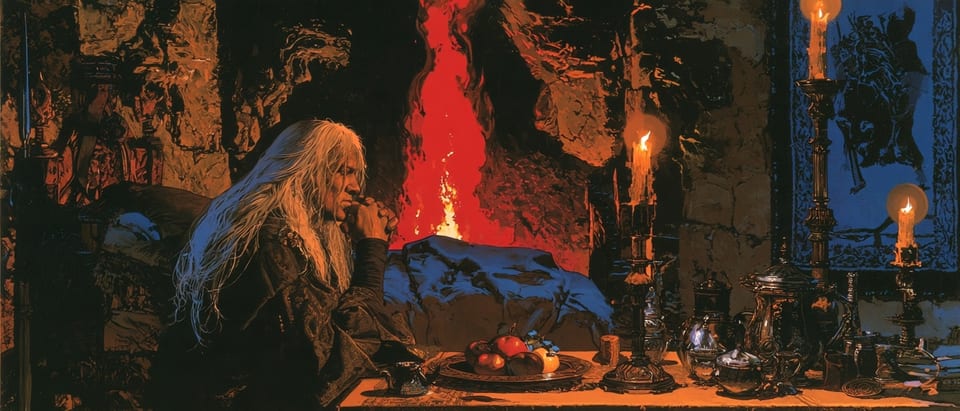
Telorin tended his workshop in the days that followed. Rallice’s absence made the work quieter than it should have been. Over the next couple of days, he took Galand’s maul and bound into it stronger runes. Saoirse came while he worked and asked what the leaf had been like in his hands. He explained that he had begun to lose himself in it before Filibeth reached him. She also asked whether they could set down on paper what she had done to cleanse herself of curses, against the chance that the Scourge had taken Darcdressil.
On the third day they gathered in the throne room. Heldranc would not watch fear take another of his children. Two roads remained: the Depths, for Darcdressil, or Far Nybei, for Thalancord. Pethengorom stood hooded at the side, well enough now to speak, one forearm gone. He spoke that the Current over Nybei was wrong. Souls there burned too brightly — not dim as the Host, not bright as Filibeth or Galand, only disturbed. He would set them down near the one that still looked as a soul should. They might find Thalancord as they had found Cadarinost: by following his enemy.
Vaerek said again that the lords should not travel. Heldranc agreed and forbade the Lords from leaving the sanctuary. Pethengorom would remain and learn how Eig moved. Heldranc wished for he and Aszurithice to bring Cadarinost home from the sand and lay him in the tomb beneath Nathalor — but for now, this was too dangerous. Saoirse asked a place in the city also for the phantoms who had served Cadarinost; it was granted.
Perstrin stated he could now recall them back to the sanctuary, but he did not possess the power to read the Current as Pethengorom. Saoirse called Aoife. The green gate opened. They stepped through into autumn.
They came out at the edge of a village under trees that twisted as they rose. Woodsmoke hung in the air. A man stood over the dead and watched them arrive. Vaerek smelled blood and drew Valeburn. No one among them spoke the man’s tongue. Telorin used a scroll of tongues, and understood him alone.
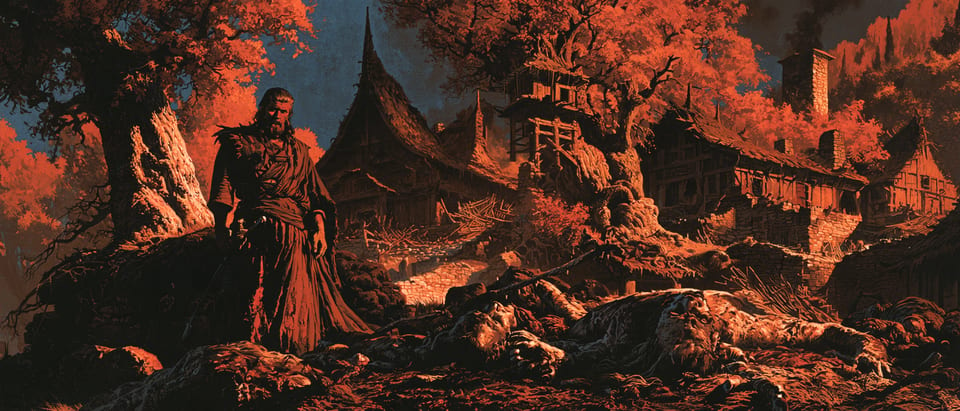
He named himself Kojin En, a swordsman of the Remnants of Thalane. Redroot Village had fallen to the curse, and he and his group had cleared it. The dead were fresh but unnatural — burned, lidless, orange eyes, rotting while still warm. No magic remained on them. Telorin mentioned Thalancord. Kojin struck his chest at Thalancord’s name and said he sought him also. These, he told them, were victims of Olesh. They attempted speech with difficulty.
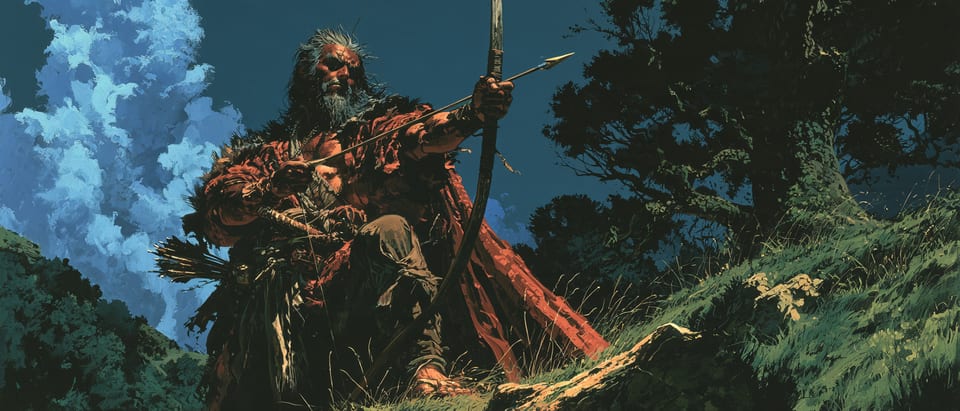
He offered his camp. They walked an hour into the countryside of somewhere in Kaiden, through mist and turning leaves. He named the others as they came into view: Baiji En, his wife; Hanto Han, a warrior of Kaiden; Silar Scorria, a dragon scholar; and Yuo Nanaga, an archer.
Speech failed them until Vaerek tried Draconic. Silar answered it. He was a scholar of dragons and knew the name they carried. Thalancord was known as the Sun Gold Drake. Thalane, the once-lord of their order, had been Thalancord’s teacher. From his name, Thalancord took his, and upheld the duty to defend Nybei against curse and terror. They were unsurprised that the Kindred had come from across the sea, and they were not afraid of what that meant.
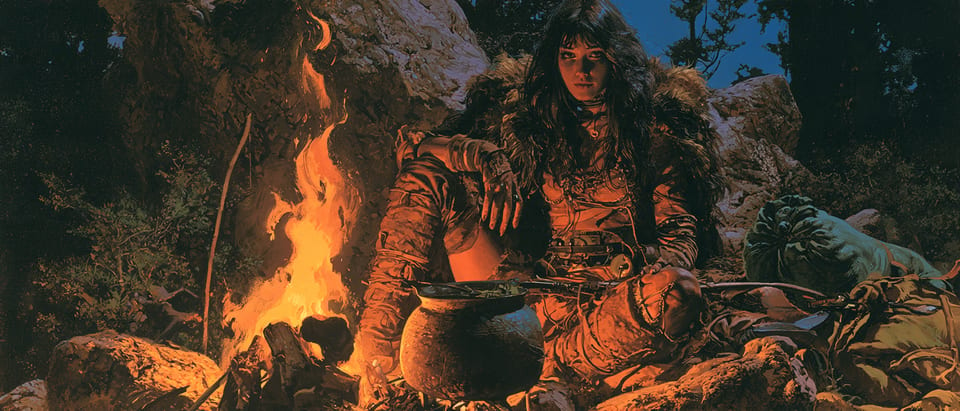
Silar gestured them to the fire. If they sought the Sun Gold Drake, there was more to say.
Act III, Chapter XXX
The green portal left nothing behind. Perstrin’s tattoos burned as he stared at the empty sand where the dragonslayer had stood, and he told Telorin the magic had been pure, cleaner than anything Pethengorom had ever woven, gone in five seconds, with no arcane trace.
Montmorian went to his twin on all fours. He nudged Cadarinost’s snout the way a beast tries to wake one who won’t, and a whimper rose from him, the largest of the Dragons. Then he screamed. The sound dropped Vaerek to his knees with blood at his ears. Wings kicked white sand into the twin suns, when Montmorian circled once and flew.
Vaerek climbed the corpse. There was no slayer’s blood to take a scent from, only the glaive’s work: deep stabs at the nape, cuts too clean for mundane steel, and a faint char as if the scales had been softened before the killing stroke. Saoirse found no lingering magic on the wounds. Telorin and Perstrin focused their attention on the magic used. With his mimicry, Perstrin opened an oval of his own, Nathalor visible on the far side, so Telorin could watch the working while it lasted. The style matched the future-Perstrin they had met in the Glaurfeldt’s past, though whether that meant the slayer came from then, or now, they could not say.
Saoirse laid peaceful rest between Cadarinost’s scales, and white light settled into the wounds.
Heldranc found his vessel. Vaerek’s eyes went red-orange, and his gait and voice were no longer his. The dragon-lord clutched Cadarinost’s head and spoke unintelligible Draconic, then demanded the slayer’s description. The witnesses spoke their account: dark armor, a black cloak, a pointed helm, and a glaive sparking green. Terror took the borrowed face. They were all dead, he said — thousands of years dead. The Dragonslayers of Raim.
A scream in the distance broke the sorrow. Vaerek, possessed, snatched Valeburn and ran. Saoirse followed her warden’s body; the rest of the group came after, through cream-white dunes, until they found the second body. Pethengorom still breathed. Blood poured from his mouth onto the Celestial Sands and one claw was gone. Montmorian stood over him with a wing lowered.
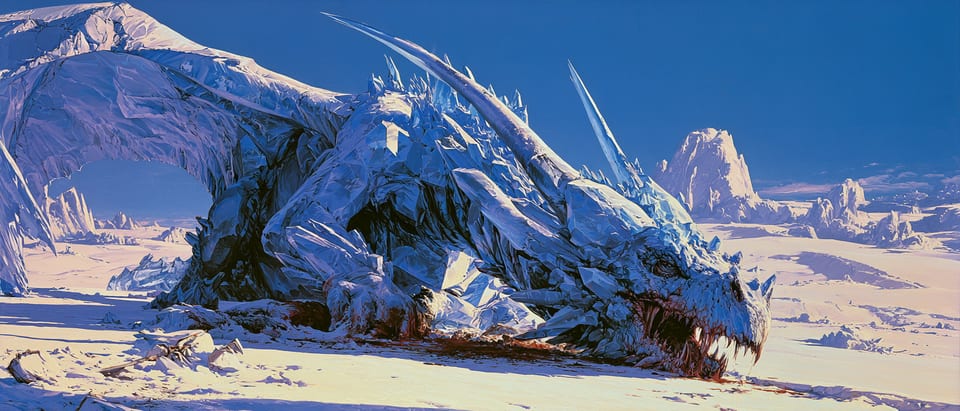
Saoirse emptied her staff of its restorative power. Perstrin copied what he could. Telorin took the leaf into his shaking hands; the raw infinite power nearly unmade him before Filibeth answered and asked whether she should bring them back.
They gathered and Montmorian became a man again, tears of rage in his eyes. Warmth took them to the Athag’ir Godtree. Filibeth’s pink-white flood closed sinew and crystal while Vaerek’s scaly triage invigorated the wounded dragon. Pethengorom resumed human shape, right hand missing, blood at the mouth, eyes open.
The Weaver spoke. A knight, he said. Magically silent. Pain in the back, then again. He had swatted, felt a blast of power, seen blood fall from the sky, and hardened his scales to gemstone. The dragonslayer had left him to bleed out. Cadarinost was a corpse. The word hit him like a second wound.
Perstrin and Telorin anchored a portal to the sanctuary and they carried the Weaver through. Heldranc waited at the foot of the throne — the ancient face showed fear. Fifteen stewards laid Pethengorom on cushions. Aszurithice cried that he lived. Nyralshirad stood silent. Heldranc asked two questions: whether the cloak had been black, and whether the helm had a spike. The group confirmed these truths once more.
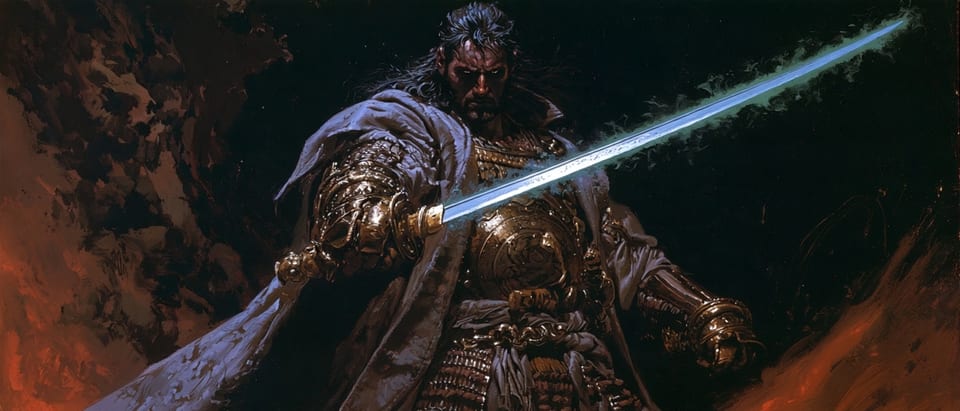
It was a nightmare returned, he said. They were describing the armor of one man in particular. The ebon raiment of the Lord High Dragonslayer of the Empire of Raim, the commander by whose order dragonkind was exterminated. His true name was lost. Among dragons he was known only as Eig, the draconic word for fear.
Galand then spoke of the pit in the caverns. In the dark he had seen Vorn on a green plain, channeling the night that sent forth the Revenants, and he had answered with the light within him — an infinitesimal vestige of Caurobor, the Light Soul, the same light that lived in the Alabaster Blade.
The slayer was not of Vorn. The host was. They were fallen of Fala, displaced, wearing Montmorian’s crest, corrupted by the whispers of the Dark and answering the Beckoning Bell of Enthar. The same whispers that had already reached for Wren.
Pethengorom would rest, then reach for Darcdressil and Thalancord. Night fell on Nathalor. Telorin went to the forge with a phantasmal servant. In the aviary that opened on winter sky, Vaerek taught the air Heldranc’s fury, producing a cone of sonic force that threw gravel into the dark night. Galand joined with Rallice’s sword. As allies, they dueled, as they once did upon their first meeting. Rock cracked and blood marked the stone — two men exhibiting their strength and ever-growing might, readying themselves for the certain wars to come.
Act III, Chapter XXIX
The fight ran both sides of the dark. Magical night poured from a pit that dropped without bottom. Revenants climbed it like a tide. Montmorian’s Alabaster Blade threw white light as he cut them down and kicked them back into the drop. Vaerek flew the ledge, Valeburn burning as it struck, and called warning as more souls rose from below. He dropped to a wounded Phantom and dragged her back from the edge.
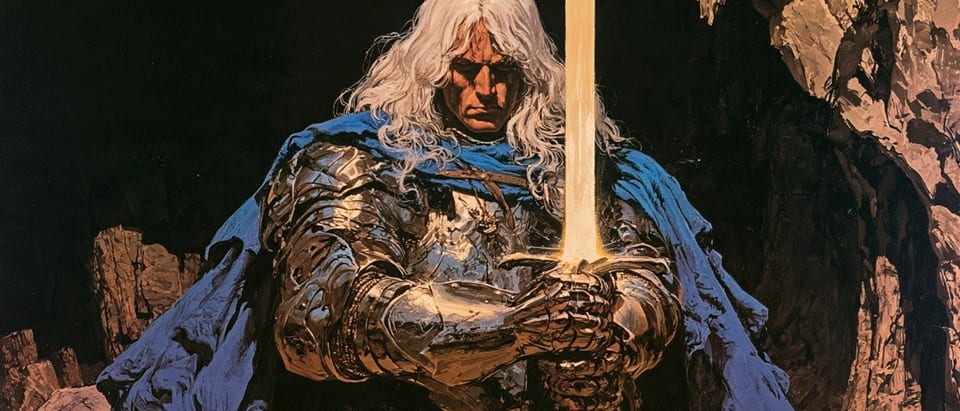
Galand’s eyes went pale gold. Wings of pure light unfurled from his back — Telorin’s work made flesh — and the cavern flashed. He dove through the wall of dark, hammer first, then lightning-swapped to Rallice’s greatsword. He rose again trailing light like a fading star.
Telorin flanked and put his rapier through one revenant; electricity leapt to the next and both fell. Then he cast Sanguine Mist into the press. The undead drank the void and stood taller. He dropped the spell the moment he understood. Saoirse lashed vitality through the dark, then blessed all allies. Six bodies moved with sudden surety — Arleth’s peace in the step. She called them around the pit to the far fight, where Phantoms were already dying.
Galand flew into the void alone. What he saw there he kept. He came back out, hammer sparking, and the last of the near host broke. Darkness receded. Torchlight returned. The pit was empty of souls, as if the night had never been.
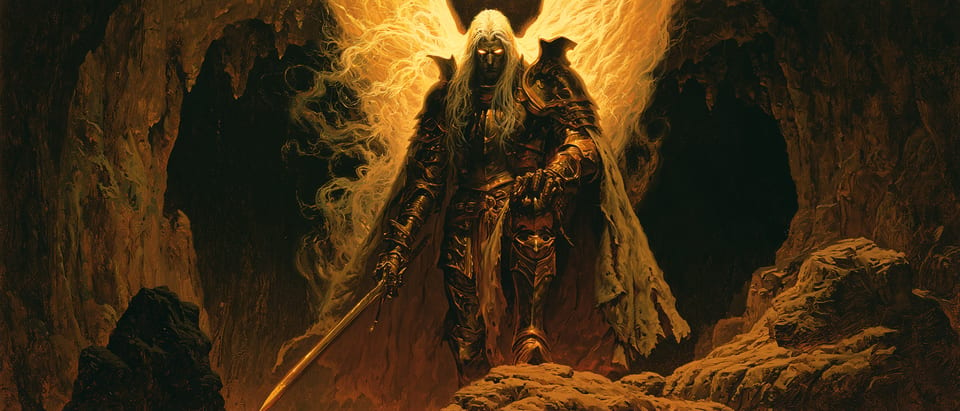
Montmorian stood among the fallen in Fala plate and stared until his eyes glazed. He billowed his cloak. Vaerek healed who he could. To the surviving Phantoms he said they had fought well, and to burn the bodies with respect — these had been people taken. Montmorian did not look back.
They walked a cavern of massacre. Void had been here, killed everyone, and left no trace. The tunnel climbed toward heat and morning. They stepped out onto the Celestial Sands. White alabaster dunes. Twin suns. No rain. No thunder.
A dragon cried across the sky. It was not Pethengorom. Sand-colored, desert-scaled, it came screeching. Montmorian’s mouth found a smirk — then Vaerek saw the truth. The dragon’s soul was dim, dimmer even than the host. Paired with it rode a soul as bright as a lord’s.
The flight failed. Wings folded. The beast tumbled and struck the dunes a thousand feet out. Sand slammed the party. When the dust settled, Cadarinost lay dying. An armored man stood on the corpse, cape billowing, glaive crackling green. The magic pulled from the wound. Vaerek watched the dragon’s soul climb into the slayer. Cadarinost’s head fell.
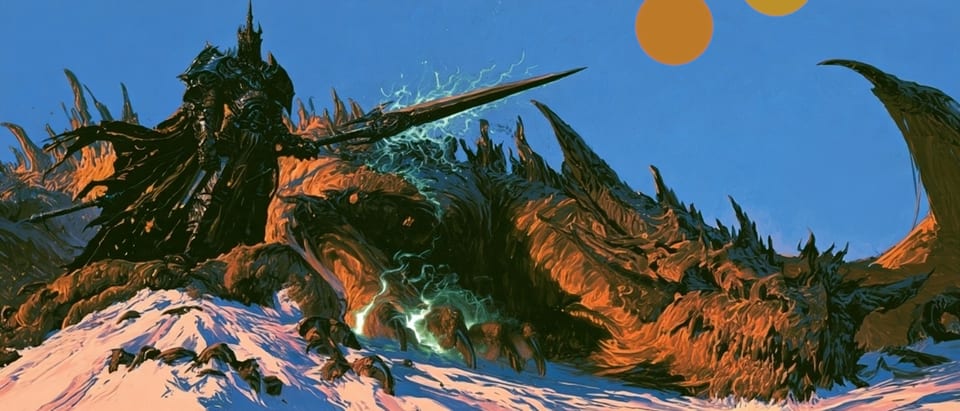
Montmorian whispered Brother. Then he screamed it. Vaerek felt the loss in the old bond with dragonkind; steam rose from his eyes instead of tears.
Montmorian ran. Light and fire burst as he took his true form and landed on the dunes, throat filling with flame. A green oval opened behind the slayer. He stepped back through it. The portal closed. He was gone.
Act III, Chapter XXVIII
Vaerek climbed the hewn stairs with four Phantoms and peered through the rubble at the cave mouth. Rain still poured. Fire still burned. Pethengorom’s flame would not be quelled — blue at the core, crystalline and sorcerous. A few dim souls lingered among the dead. The dragon himself was gone.
Vaerek told the Phantoms the truth: the mage who had saved them could take a dragon’s form. Their fear broke into awe, then hope. He called Pethengorom’s name into the storm, but was not answered.
Below, the party chose to leave the Phantoms in their sanctuary and press north. Taleera told them more of the host: empty eyes, black hoods, a vigor gone. For years they had come in small, skulking bands. Only in the past year had they marched in numbers, organized, under a storm that had raged ceaselessly.
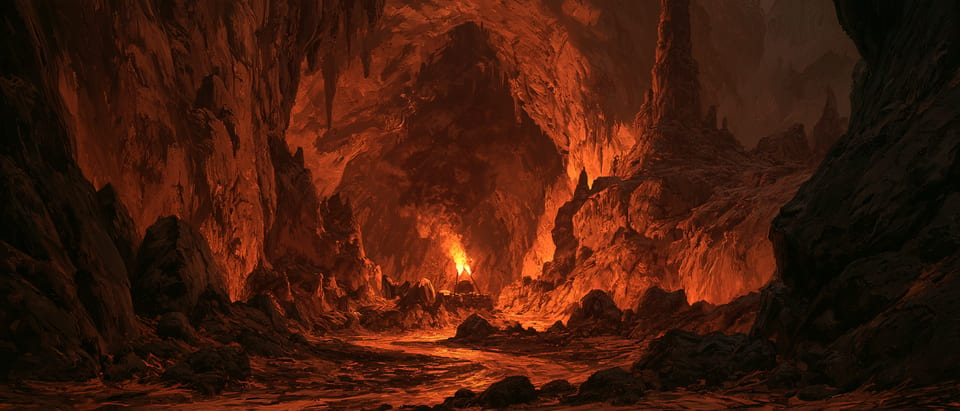
The caverns ran deep, lined with torches. The sheer pathway dropped into blackness. They walked for a time until two dwellers stopped Montmorian and pointed at his chest. The sigil on his Fala armor was the sigil of their enemy, the Revenants.
Telorin spoke the thought no one wanted: perhaps the Revenant Host were Falans taken in the Fading, corrupted by something darker. Montmorian’s stare went distant. Saoirse turned and trudged back to the entrance to see with her own eyes.
Outside, the canyon was a sea of burning dead. Dragon-fire did not touch her. She turned bodies until she found what she feared: blackened plate that held the symbol of the Holy Three, cloaks dyed or charred over a blue that Rallice had worn. She cut a breastplate free and tore a scrap of the old color. In the thunder she paused and asked Arleth if that sea of death was what the pilgrimage had meant. Ulric’s warning returned to her: the path she walked would lead to ruin. She fled the moans of the dying back into the cave.
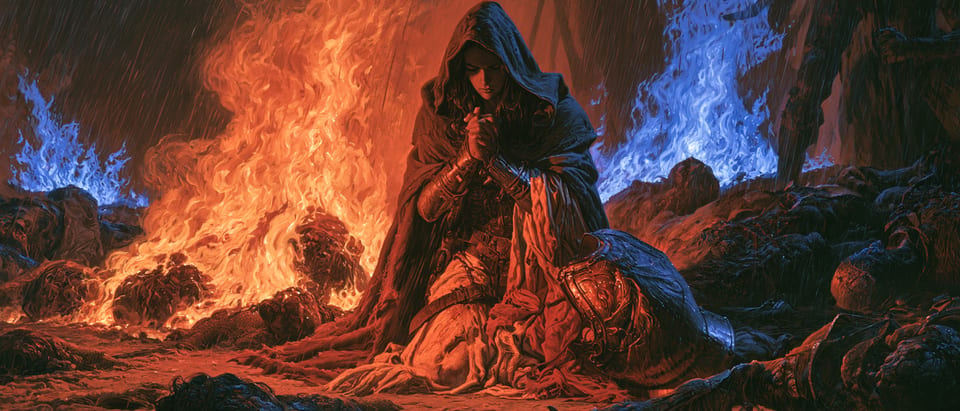
She put the proof in Montmorian’s hands. He stared a long time. Then he swore that whoever had done this would feel their wrath, and with a shout he hurled plate and cloak into the dark below.
They walked on along a ledge above a drop that had no bottom. Vaerek heard movement far down — too large for vermin — and then a pulse that was not natural. Galand heard it next. Darkness poured through the cavern like a tide, swallowing torchlight. Magic filled the air, high and dark, with no single source. Souls rose from the pit and reached the edge.
Montmorian drew the Sword of Torados, an ancient alabaster blade of a Val'norain that threw its own light. Vaerek’s cloak split into wings. Telorin laid haste on Galand. The host stepped out of the dark as if walking on open air.
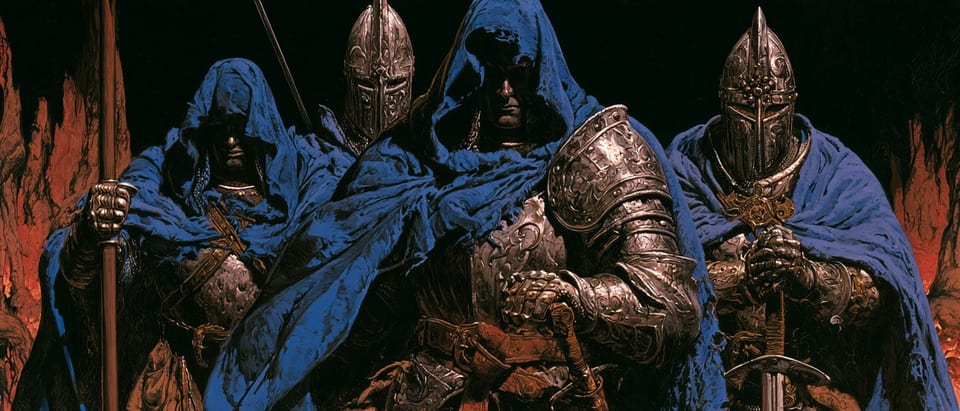
Montmorian did not hold back. The glowing sword cut and kicked the first revenant back into the dark. Galand’s hammer answered with thunder. Vaerek struck from above. Saoirse, for the first time, went on the offensive: an icicle grown with Aszurithice’s precision, vitality sparking as it lodged in a throat. They were undead.
The fight spilled along the ledge. Revenants swung with empty, inhuman strength; void-magic slid off Galand, ineffective. Phantoms fought at their side. One of their guides fell. Saoirse put a glowing hand on the survivor’s shoulder and told him to strike for his friend.
Telorin, back to the dark, heard whispers from within. He answered with a cloud of rust. Vaerek healed, called Heldranc’s name, and rose again. An orb of light bloomed deeper in the cavern. What more waited in the dark was unknown.